
Werkt Rood Lichttherapie en werken LED lichttherapie lampen?
Conclusie in 1 oogopslag:
Hier is het korte antwoord: ja, wetenschappelijk bewijs rood lichttherapie is duidelijk. Lichttherapie werkt beslist en wordt ondersteund door een schat aan gepubliceerd onderzoek. Geloof het van de duizenden studies medische onderzoeken: rood licht therapie werkt.
Het bewijs is het sterkst voor huidverbetering en wondgenezing, spierherstel na inspanning en gewrichts- en spierpijn: daar bestaan gerandomiseerde studies en meta-analyses die een effect laten zien.
Wil jij die onderzoeken wel eens inzien en specifiek op de aandoening of klachten die jij hebt? Dan kun je op onze nieuwe pagina heel inzichtelijk zien hoeveel onderzoek en wat voor onderzoek specifiek er gedaan is naar wat jij specifiek zoekt. De publicaties zijn allemaal in het Engels dus je moet je aandoening even in het Engels invoeren voor goed resultaat.
Hoeveel onderzoek is er eigenlijk?
Lichttherapie ‘of fotobiomodulatie technisch genoemd’ is inmiddels een populaire therapie vorm op het gebied van gezondheid. Vele klinische onderzoeken hebben dit al bewezen. Niels Ryberg Finsen ontving in 1903 de Nobelprijs voor Fysiologie of Geneeskunde voor zijn werk aan lichttherapie.
Er zijn sinds die tijd tot nu al vele onderzoeken gedaan. Onderstaande aantallen komen uit de PBM-database van Vladimir Heiskanen, met ruim 10.000 studies de meest complete openbare verzameling van onderzoek naar fotobiomodulatie:
- 3290 onderzoeken op mensen, waarvan 444 met LED
- 2580 onderzoeken op dieren, waarvan 383 met LED
- 1742 onderzoeken invitro, waavan 274 met LED
- En nog vele reviews, 1777 op het moment van schrijven
Golflengtes (bij 6.550 onderzoeken met een opgegeven golflengte) - 49% gebruikt rood licht (600–699 nm) en 63% nabij-infrarood. 969 onderzoeken gebruiken allebei.
- De vaakst gebruikte golflengte is 660 nm (1.166 onderzoeken), daarna 808, 830, 810, 633 en 850 nm.
The vast majority of these studies are positive, and it is often concluded that even more research is needed to discover why a light frequency, also called a wavelength, seems so simple yet can achieve such beautiful red light therapy results.
Photobiomodulation, which is now better known as red light therapy, is a form of light therapy. Photobiomodulation promotes the self-healing capacity of humans. This is done using light with a specific wavelength and intensity. As soon as this light penetrates the body, the mitochondria are activated. These are the body’s energy suppliers. Activation of these mitochondria promotes the self-healing capacity of the cell. And those cellular changes can, in turn, lead to improved health.
Red light therapy will also strongly promote blood circulation in the body and improve lymphatic function and collagen. This makes red light therapy very versatile for both cosmetic purposes such as skin improvement and for improving and healing complaints such as inflammation and wounds, and even helping to improve chronic conditions such as the winter blues or other forms of depression and even long-COVID.
What does Red Light Therapy work well for?
Een korte lijst van verbeteringen of genezingen die we al hebben gezien in 2026:
- Rood lichttherapie voor huid ( acné, kleur, rosacea, rimpels etc.)
- Wound healing (red light therapy can also be used on an open wound)
- Concussion
- Rheumatism and fibromyalgia
- Recovery from training (endurance and strength training)
- Gewrichtspijn ( bijvoorbeeld na een ongeval )
- Fatigue (promotes energy)
- Slaap
- Brain fog (improves mental clarity)
Light therapy: legitimate medicine or not?
NASA had that same question in the early 1990s and went to work. After discovering that red light lamps activated the natural growth of plants, they began researching medical applications with red light therapy for humans. NASA’s findings showed health benefits of red light therapy with specific wavelengths of red light delivered by light emitting diodes (LEDs and LASER).
Medical science has taken note, and over the past three decades, extensive clinical research has been conducted into the various medical applications of red light therapy. The results are extremely encouraging for people looking for natural, non-invasive treatments for a wide range of medical conditions. We now know that the most commonly used wavelengths, 660nm and 850nm, work positively for almost all bodily functions.
The impact of light is most recognizable in the form of pigment development due to UV from the sun or a tanning bed. The fact that you can tan so quickly from light shows how sensitive the body is to these frequencies. Many women are also familiar with hair removal using IPL or Laser; light is therefore strong enough to remove hair under the right conditions. Other forms of light therapy, such as UV-B light therapy, have also been used in hospitals and clinics for decades.
How does LED Red Light Therapy work?
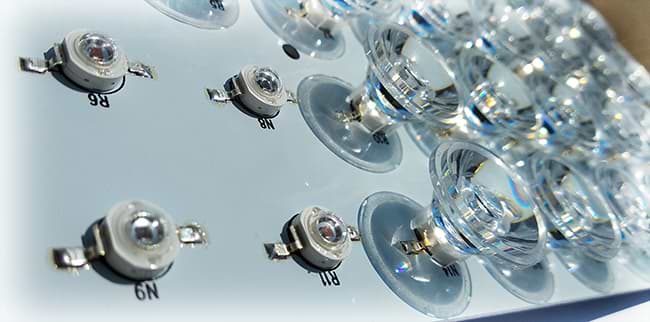
Natural red light feeds the cells. How exactly does red light therapy work? A red light therapy lamp like a NorahLux delivers red and short-wave infrared wavelengths directly to your body with powerful LEDs. Light is amplified through concentrated emission by special lenses. So strong that it contains a massive amount of energy. The positive effects of photobiomodulation are around 660nm and 850nm.
The light from the LEDs causes photo-biochemical reactions in cells. The word ‘photo’ actually means light: (Gr. φῶς, gen. φωτός (phôs, phôtós) = light). These biophotons of natural therapeutic light produce a chemical reaction in the mitochondria of your cells that stimulate energy production and regeneration.
LED red light therapy benefits include that it is painless and should not be confused with ‘High Level Laser Therapy’. This latter form of laser light therapy uses heat that penetrates the body. And that can be painful in some cases. The light used by LED light therapy is much safer than laser and yet strong enough to promote healing deep within the body. You can read much more about this in the article ‘How does Red Light Therapy work?‘.
Does Red Light therapy work better in 2026?
Yes, NorahLux lamps have made an interesting advancement, but no miracles should be attached to this. It makes the lamps slightly better but not MUCH better. Red Light Therapy has always worked well and is now a step better. The progress made over the years is called ‘Duo Led’ and is technically ‘Duo Chip’. This allows 2 LEDs to burn behind each lens, allowing us to blend the light even more beautifully into a single whole.
Zo zorgen we dat elke lens zowel rood als infrarood uitstraalt in de golflengtes waar wij al 9 jaar ervaring mee hebben, en de nieuwe generaties hebben nu 4 dicht bij elkaar liggende golflengtes. zo vormen 660nm 670nm rood en 830nm en 850nm infrarood samen 1 geheel uit de lenzen. Voorheen was het niet mogelijk zowel 660nm als 670nm samen te gebruiken omdat deze golflengtes zo dicht bij elkaar liggen dat dit niet eerder zo te ontwikkelen was.
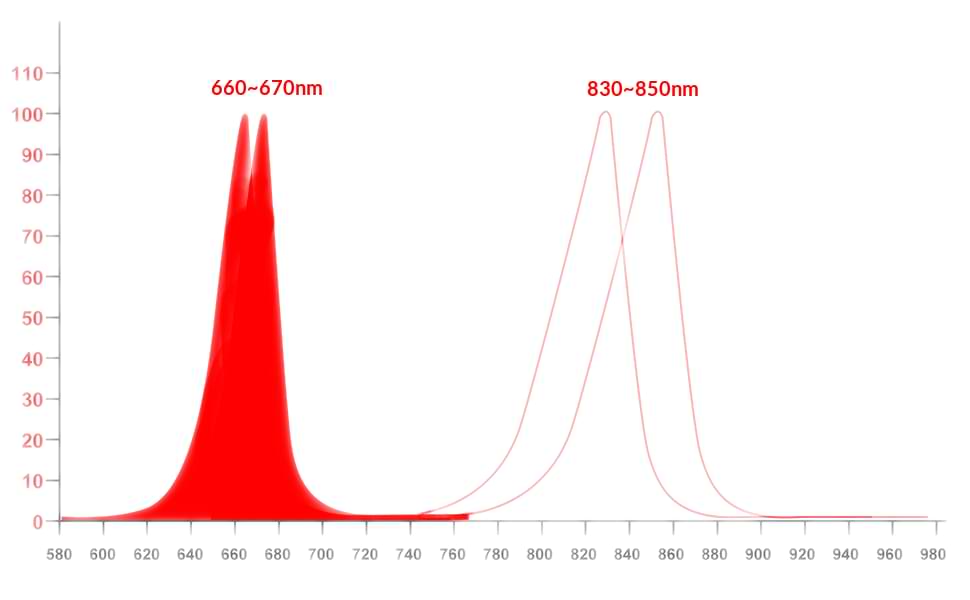
Sommige merken kiezen voor 5 tot 7 verschillende kleuren (golflengtes) waardoor het licht nooit mooi verdeeld is en dus nooit mooi samen 1 geheel vormt. Wij zien bij NorahLux het nut niet van een klein plekje op je lichaam wat een andere golflengte licht ontvangt dan de omliggende huid.
Is meer niet beter dan? Nee, één van de grootste spelers was het “meer is beter” marketing trucje beu en is zelfs weer ouderwets op 1 led per lens terug gegaan. Zij tonen aan, wat ook klopt, dat de oude lampen krachtiger waren. Nu is krachtig ook niet perse beter, en daarom blijven wij bij de perfecte middenweg van meer golflengtes die elkaar aanvullen en toch fikse kracht, net iets minder dan single-leds.
LEDs make the difference
Highly efficient medical-grade LEDs are by far the best way to deliver the specific wavelengths of light and intensity needed for optimal full-body light therapy. LEDs are capable of delivering a specific wavelength of light with high efficiency, with little heat, allowing sessions to take place for longer. They last 25 times longer than incandescent bulbs and they are durable and unlikely to break. LEDs have revolutionized lighting over the past two decades and have made it possible for individuals to use safe, effective light therapy in their own homes at a reasonable price.
A major 2013 study on light therapy conducted by researchers from Harvard and MIT praised light therapy for its
“non-invasive nature and the almost complete absence of side effects.”
Source: this study
The two main effects of Red Light Therapy are:
More ATP energy: light therapy reduces oxidative stress and increases the production of adenosine triphosphate (ATP). ATP, produced by cellular respiration, is a crucial molecule that all living things need to create usable energy for your body. It is often called “the energy molecule of life.” This is cellular biochemical energy. ATP ensures multiple positive physiological reactions, such as increasing cellular metabolism, which stimulates the body’s self-healing capacity.
This means, among other things, more energy and overall better health, which serve as the basis for all other physical improvements.
Improved cell signaling: specific wavelengths of light help create a better oxidative environment in your cells. This results in the activation of numerous intracellular signaling pathways, increased protein synthesis, enzyme activation, and improved cell cycle progression.
Health benefits of red and short-wave infrared light therapy
Duizenden peer-reviewed klinische studies en onderzoeken naar roodlichttherapie zijn uitgevoerd in de afgelopen 3 decennia en gepubliceerd in belangrijke wetenschappelijke tijdschriften. Het bewijsmateriaal is overweldigend in het voordeel van de effectiviteit en veiligheid ervan. [1,2,3,4,5,6] Binnen de EU is de CE-markering de relevante toets: onze lampen zijn CE-gecertificeerd als medisch hulpmiddel klasse I.
Here is an overview of some of the key, clinically proven health benefits of red light therapy:
Inflammation and joint pain
One of the most important responses to red light therapy is a strong reduction in inflammation and oxidative stress, with significantly lower joint pain. [7,8] Red and infrared light therapy helps reduce inflammation and improve tissue and lymph, and as a bonus, blood circulation is improved, which promotes even more extra healing.
Curing winter blues or depression with Red Light Therapy
In recent years, a number of studies have been conducted to show whether NIR (Near infrared light / Short-wave infrared light) specifically between 800nm and 950nm can bring improvement to brain structure via laser or LED in a way that improves depression. Research was also conducted on multiple forms of depression such as Seasonal Affective Disorder (winter depression / the winter blues), comorbid depression, anxious depression, and others such as more general mild to severe depression. Many studies conclude that these forms of light therapy provide improvement against depression and that more specific research is desired in the coming years. In the database above, a number of these studies can be found under the heading ‘Depression’.
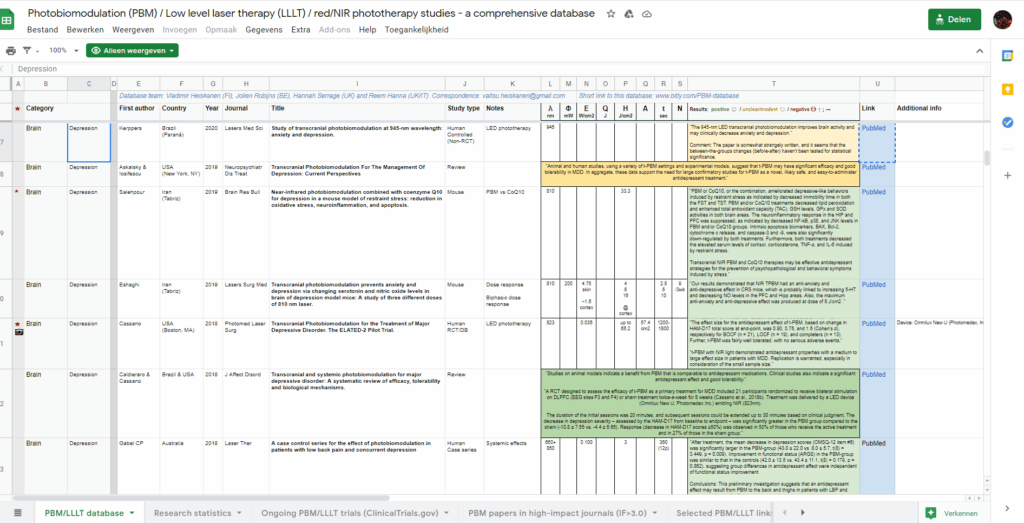
Image of the database depression section
skin improvement, collagen and anti-aging
Red light therapy feels so rejuvenating because it promotes the production of collagen, which gives the skin its elasticity, gives your hair its strength, and gives connective tissue its ability to hold everything together. [4] Numerous studies and research have shown that light therapy improves skin tone and texture, reduces signs of aging, and accelerates the healing of wounds and scars. [1,5]
In the ‘Learn More’ menu, you will find more articles specifically about the promotion of ‘skin‘ and ‘collagen‘
Female intimate zone problems
Light therapy can also help with many types of intimate zone and uterus-related complaints. We developed the LiYoni specifically for this. For more information on how Red light therapy and specifically the LiYoni can help, you can read the following articles: Intimate zone light therapy and Light therapy for fungi.
Training and muscle recovery
Numerous studies and research have shown that light therapy helps your body produce more cellular energy and reduce oxidative stress, allowing tired and damaged muscle tissue to recover faster. [9]
Recent research from 2016, published in the American Journal of Physical Medicine and Rehabilitation, shows that the application of light therapy also promotes the growth of healthy muscle tissue, naturally increasing muscle size and volume, as well as strength. [4]
Melatonin and sleep
De meeste mensen worden ‘s avonds blootgesteld aan kunstlicht met een hoge kleurtemperatuur, dat de melatonineaanmaak onderdrukt en inslapen bemoeilijkt. [10] Rood en kortegolf-infrarood licht doen dat niet, waardoor je eigen ritme intact blijft. Er zijn daarnaast aanwijzingen dat rood licht de melatoninespiegel actief kan verhogen: bij twintig topsporters lag de serummelatonine na veertien avonden bestraling met 658 nm significant hoger dan in de controlegroep, samen met betere slaapkwaliteit. [11] Die studie is klein en nog niet op grotere schaal herhaald.
Een artikel van NorahLux over blauw ‘junk’ licht vind je hier.
Safe, non-invasive and drug-free
In tegenstelling tot de meeste conventionele behandelingen, is roodlichttherapie veilig, niet-invasief, gebruikt geen chemicaliën of medicijnen en wordt niet geassocieerd met schadelijke bijwerkingen. Roodlichttherapie maakt eenvoudig gebruik van de natuurlijke genezende en verjongende voordelen van een specifiek bereik van therapeutisch natuurlijk licht en levert deze gerichte energie in de therapeutische golflengten (660 nm en 850 nm) op een hoger niveau dan direct zonlicht, zonder schadelijke UV-stralen. Het gebrek aan zonlicht doordat we teveel binnen doorbrengen wordt hierdoor in korte tijd goedgemaakt.
Dimensions for optimal treatment:
In light therapy, size matters. The more surface area you can cover, the better. Full, even, and consistent coverage provides optimal treatment benefits, at least when it comes to your general and overall health. (For more information on which sizes are suitable for which purposes, read here.)
You can undergo light therapy at specialized light therapists or salons. However, it is often time-consuming to go to a salon and the costs will also add up considerably. Why not choose to use red light therapy in your own home? Time and cost-saving! In addition, the whole family can also use it. Check the shop to choose which lamp is right for you.
You can also look at what your goal is for doing light therapy. Do you only want to treat your face or your entire body?
Many customers will start with just the face but will later realize that a red light therapy lamp can do so much more. That is why various sizes are for sale so that you can choose the right light therapy LED lamp for your goal. Depending on your goal, you can discover the benefits of NorahLux LED lamps in just 5 to 10 minutes a day.
Frequently Asked Questions
Is red light therapy good?
Ja. Er zijn duizenden klinische onderzoeken die de voordelen van rood lichttherapie bevestigen. Het is pijnloos en wordt goed verdragen; schadelijke bijwerkingen zijn niet bekend. Wel bestaat er zoiets als te veel: fotobiomodulatie kent een tweefasige dosisrespons, waarbij een te lange of te intensieve sessie het effect vermindert in plaats van versterkt. Dat levert geen medisch risico op — het is een signaal dat je minder moet doen in plaats van meer.
How fast does red light therapy work?
That depends on the goal. For muscle recovery, red light therapy results can be noticeable after just a few sessions. For skin and collagen, it takes a bit longer, on average 4 to 8 weeks with daily use.
How often per day can you go under the red lamp?
Eén sessie van 10 tot 15 minuten per dag is voor de meeste mensen genoeg, op 5 tot 30 centimeter afstand. Meer is niet altijd beter. Het lichaam heeft ook tijd nodig om te reageren op de behandeling.
How quickly do you get results from light therapy?
The first small improvements are often noticeable after 1 to 2 weeks. Clear red light therapy results are visible after 4 to 12 weeks, depending on the area you are treating and how regularly you use the lamp.
Is red light therapy safe for your eyes?
Kort antwoord: ja, mits je een paar simpele richtlijnen aanhoudt. Rood en nabij-infrarood licht is niet-ioniserend, wat betekent dat het geen schade aanricht zoals UV-straling dat wel kan doen. Toch kan direct en langdurig in een sterke lichtbron kijken op korte afstand onaangenaam zijn voor de ogen, simpelweg door de helderheid — niet door de golflengte zelf. Onze aanbeveling: houd je ogen tijdens een sessie gesloten of kijk niet direct in de lamp op korte afstand, zeker bij langere sessies. Wil je toch met open ogen behandelen, bijvoorbeeld voor een gezichtsbehandeling, gebruik dan een beschermbril.
Are there side effects of red light therapy?
Short answer: when used correctly, side effects are rare and usually mild. The most reported experience is a slight warm feeling on the skin during the session, which is normal and quickly subsides. Some people with sensitive skin may experience temporary redness, similar to light exposure to sunlight. This is normally no cause for concern and disappears on its own. If you are using medication that makes your skin more light-sensitive, consult your doctor first.
How often and how long do you use red light therapy?
Kort antwoord: 10 tot 15 minuten per sessie, op 5 tot 30 centimeter afstand, vier keer per week tot dagelijks. Dagelijks gebruik is prima, mits je die sessieduur en afstand aanhoudt — meer is niet per se beter, omdat het effect van lichttherapie een drempelwaarde kent (biphasic dose response). Consistentie over meerdere weken levert doorgaans betere resultaten op dan een enkele lange sessie. Begin bij twijfel met kortere sessies (5-10 minuten) en bouw dit op naarmate je huid of lichaam eraan gewend raakt.
Does red light therapy help with hair loss?
Short answer: there are indications that it can help, especially in early stages of hair loss. Red and near-infrared light is being researched as a supportive treatment for various forms of hair loss, including alopecia areata and hereditary hair loss, because it can stimulate blood flow to the scalp and cell activity in hair follicles. It is not a guaranteed solution and works best in combination with a healthy lifestyle and, where necessary, in consultation with a doctor or dermatologist — but it is a frequently asked question that deserves its own short answer on this page.
Scientific sources and medical references:
Source 1 Effects of energy-efficient light therapy on wound healing with LED and laser.
Source 4 LLLT on muscle tissue: performance, fatigue and recovery benefit from the power of light.
Source 5 LLLT in the skin: stimulating, healing, restoring.
Source 6 Facial rejuvenation in the Triangle of ROS.
Source 8 Low-level laser therapy for osteoarthritis and rheumatoid arthritis: a meta-analysis.
Source 9 low-level laser therapy in skeletal muscle fatigue in humans: what is better?
Bron 11 Zhao J, Tian Y, Nie J, Xu J, Liu D. Rood licht en de slaapkwaliteit en het uithoudingsvermogen van Chinese vrouwelijke basketbalspeelsters. Journal of Athletic Training 2012;47(6):673-678. (n = 20, cohortonderzoek)


