Does Red Light Therapy work and do LED light therapy lamps work?
Conclusion at a glance: Here is the short answer: yes, the scientific evidence for red light therapy is clear. Light therapy definitely works and is supported by a wealth of published research. Take it from NASA, medical studies, influencers, and elite trainers: red light therapy works.
If you are reading this, you have probably already heard of red light therapy and its supposed natural health benefits. But does it really work? This article answers 그 question by examining the extensive foundation of clinical research into red and short-wave infrared light therapy. This way, you will discover exactly how red light therapy works and what it can do for you.
Light therapy — technically called photobiomodulation — is on the rise to become a popular form of therapy in the field of health. Many clinical studies have already proven this. Niels Ryberg Finsen received the Nobel Prize in Physiology or Medicine in 1903 for his work on light therapy. Since then, many studies have been conducted. Here are some figures on what has been published online:
2,180 studies on humans, 280 of which used LED
1,980 studies on animals, 280 of which used LED
1,220 in-vitro studies, 190 of which used LED
And many more reviews
Now in 2026, these numbers are even much higher
The vast majority of these studies are positive, and it is often concluded that even more research is needed to discover why a light frequency, also called a wavelength, seems so simple yet can achieve such beautiful red light therapy results.
Photobiomodulation, which is now better known as red light therapy, is a form of light therapy. Photobiomodulation promotes the self-healing capacity of humans. This is done using light with a specific wavelength and intensity. As soon as this light penetrates the body, the mitochondria are activated. These are the body’s energy suppliers. Activation of these mitochondria promotes the self-healing capacity of the cell. And those cellular changes can, in turn, lead to improved health.
Red light therapy will also strongly promote blood circulation in the body and improve lymphatic function and collagen. This makes red light therapy very versatile for both cosmetic purposes such as skin improvement and for improving and healing complaints such as inflammation and wounds, and even helping to improve chronic conditions such as the winter blues or other forms of depression and even long-COVID.
What does Red Light Therapy work well for?
A short list of improvements or healings we have already seen in 2024:
Red light therapy for skin (acne, complexion, rosacea, wrinkles, etc.)
Wound healing (red light therapy can also be used on an open wound)
Concussion
Rheumatism and fibromyalgia
Recovery from training (endurance and strength training)
Joint pain (for example after an accident)
Fatigue (promotes energy)
Sleep
Brain fog (improves mental clarity)
Light therapy: legitimate medicine or not?
NASA had that same question in the early 1990s and went to work. After discovering that red light lamps activated the natural growth of plants, they began researching medical applications with red light therapy for humans. NASA’s findings showed health benefits of red light therapy with specific wavelengths of red light delivered by light emitting diodes (LEDs and LASER).
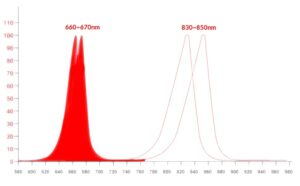
Medical science has taken note, and over the past three decades, extensive clinical research has been conducted into the various medical applications of red light therapy. The results are extremely encouraging for people looking for natural, non-invasive treatments for a wide range of medical conditions. We now know that the most commonly used wavelengths, 660nm and 850nm, work positively for almost all bodily functions.
The impact of light is most recognizable in the form of pigment development due to UV from the sun or a tanning bed. The fact that you can tan so quickly from light shows how sensitive the body is to these frequencies. Many women are also familiar with hair removal using IPL or Laser; light is therefore strong enough to remove hair under the right conditions. Other forms of light therapy, such as UV-B light therapy, have also been used in hospitals and clinics for decades.
How does LED Red Light Therapy work?
Natural red light feeds the cells. How exactly does red light therapy work? A red light therapy lamp like a NorahLux delivers red and short-wave infrared wavelengths directly to your body with powerful LEDs. Light is amplified through concentrated emission by special lenses. So strong that it contains a massive amount of energy. The positive effects of photobiomodulation are around 660nm and 850nm.
The light from the LEDs causes photo-biochemical reactions in cells. The word ‘photo’ actually means light: (Gr. φῶς, gen. φωτός (phôs, phôtós) = light). These biophotons of natural therapeutic light produce a chemical reaction in the mitochondria of your cells that stimulate energy production and regeneration.
LED red light therapy benefits include that it is painless and should not be confused with ‘High Level Laser Therapy’. This latter form of laser light therapy uses heat that penetrates the body. And that can be painful in some cases. The light used by LED light therapy is much safer than laser and yet strong enough to promote healing deep within the body. You can read much more about this in the article ‘How does Red Light Therapy work?‘.
Does Red Light therapy work better in 2026?
Yes, NorahLux lamps have made an interesting advancement, but no miracles should be attached to this. It makes the lamps slightly better but not MUCH better. Red Light Therapy has always worked well and is now a step better. The progress made over the years is called ‘Duo Led’ and is technically ‘Duo Chip’. This allows 2 LEDs to burn behind each lens, allowing us to blend the light even more beautifully into a single whole.
This ensures that each lens emits both red and infrared in the wavelengths we have 7 years of experience with, and the new generations even have 4 closely spaced wavelengths. Thus, 660nm, 670nm red and 830nm, 850nm infrared together form one whole from the lenses. Previously, it was not possible to use both 660nm and 670nm together because these wavelengths are so close to each other that it could not be developed this way before.
Some brands choose 5 to 7 different colors (wavelengths), which means the light is never nicely distributed and therefore never forms a beautiful whole. At NorahLux, we don’t see the point of a small spot on your body receiving a different wavelength of light than the surrounding skin.
LEDs make the difference
Highly efficient medical-grade LEDs are by far the best way to deliver the specific wavelengths of light and intensity needed for optimal full-body light therapy. LEDs are capable of delivering a specific wavelength of light with high efficiency, with little heat, allowing sessions to take place for longer. They last 25 times longer than incandescent bulbs and they are durable and unlikely to break. LEDs have revolutionized lighting over the past two decades and have made it possible for individuals to use safe, effective light therapy in their own homes at a reasonable price.
A major 2013 study on light therapy conducted by researchers from Harvard and MIT praised light therapy for its
“non-invasive nature and the almost complete absence of side effects.”
More ATP energy: light therapy reduces oxidative stress and increases the production of adenosine triphosphate (ATP). ATP, produced by cellular respiration, is a crucial molecule that all living things need to create usable energy for your body. It is often called “the energy molecule of life.” This is cellular biochemical energy. ATP ensures multiple positive physiological reactions, such as increasing cellular metabolism, which stimulates the body’s self-healing capacity. This means, among other things, more energy and overall better health, which serve as the basis for all other physical improvements.
Improved cell signaling: specific wavelengths of light help create a better oxidative environment in your cells. This results in the activation of numerous intracellular signaling pathways, increased protein synthesis, enzyme activation, and improved cell cycle progression.
Health benefits of red and short-wave infrared light therapy
Thousands of peer-reviewed clinical studies and research into red light therapy have been conducted over the past 3 decades and published in major scientific journals. The evidence is overwhelmingly in favor of its effectiveness and safety, and the FDA has approved light therapy for the treatment of joint pain, wrinkle reduction, and many other conditions. [1,2,3,4,5,6]
Here is an overview of some of the key, clinically proven health benefits of red light therapy:
Inflammation and joint pain
One of the most important responses to red light therapy is a strong reduction in inflammation and oxidative stress, with significantly lower joint pain. [7,8] Red and infrared light therapy helps reduce inflammation and improve tissue and lymph, and as a bonus, blood circulation is improved, which promotes even more extra healing.
Curing winter blues or depression with Red Light Therapy
In recent years, a number of studies have been conducted to show whether NIR (Near infrared light / Short-wave infrared light) specifically between 800nm and 950nm can bring improvement to brain structure via laser or LED in a way that improves depression. Research was also conducted on multiple forms of depression such as Seasonal Affective Disorder (winter depression / the winter blues), comorbid depression, anxious depression, and others such as more general mild to severe depression. Many studies conclude that these forms of light therapy provide improvement against depression and that more specific research is desired in the coming years. In the database above, a number of these studies can be found under the heading ‘Depression’.
Image of the database depression section
skin improvement, collagen and anti-aging
Red light therapy feels so rejuvenating because it promotes the production of collagen, which gives the skin its elasticity, gives your hair its strength, and gives connective tissue its ability to hold everything together. [4] Numerous studies and research have shown that light therapy improves skin tone and texture, reduces signs of aging, and accelerates the healing of wounds and scars. [1,5] In the ‘Learn More’ menu, you will find more articles specifically about the promotion of ‘skin‘ and ‘collagen‘
Female intimate zone problems
Light therapy can also help with many types of intimate zone and uterus-related complaints. We developed the LiYoni specifically for this. For more information on how Red light therapy and specifically the LiYoni can help, you can read the following articles: Intimate zone light therapy and Light therapy for fungi.
Training and muscle recovery
Numerous studies and research have shown that light therapy helps your body produce more cellular energy and reduce oxidative stress, allowing tired and damaged muscle tissue to recover faster. [9]
Recent research from 2016, published in the American Journal of Physical Medicine and Rehabilitation, shows that the application of light therapy also promotes the growth of healthy muscle tissue, naturally increasing muscle size and volume, as well as strength. [4]
Ben Greenfield, voted best personal trainer in America, also swears by red light therapy for his health and performance, in addition to sex drive and other specific male-related things. He wrote an important guide and answered frequently asked questions about red light therapy in late 2018 with a lot of good information, as well as his personal experience with his red light lamp.
Melatonin and sleep
Most people are exposed to a lot of unhealthy artificial light that disrupts your circadian rhythm and makes it harder to sleep. Red and short-wave infrared does exactly the opposite and helps protect your internal clock. Clinical studies show that light therapy also increases natural melatonin production for healthier sleep. [10]
Unlike most conventional treatments, red light therapy is safe, non-invasive, uses no chemicals or drugs, and is not associated with harmful side effects. Red light therapy simply uses the natural healing and rejuvenating benefits of a specific range of therapeutic natural light and delivers this targeted energy at a higher level than the sun, without harmful UV rays. The lack of sunlight caused by spending too much time indoors is thus made up for in a short time.
Dimensions for optimal treatment:
In light therapy, size matters. The more surface area you can cover, the better. Full, even, and consistent coverage provides optimal treatment benefits, at least when it comes to your general and overall health. (For more information on which sizes are suitable for which purposes, read here.)
You can undergo light therapy at specialized light therapists or salons. However, it is often time-consuming to go to a salon and the costs will also add up considerably. Why not choose to use red light therapy in your own home? Time and cost-saving! In addition, the whole family can also use it. Check the shop to choose which lamp is right for you.
You can also look at what your goal is for doing light therapy. Do you only want to treat your face or your entire body?
Many customers will start with just the face but will later realize that a red light therapy lamp can do so much more. That is why various sizes are for sale so that you can choose the right light therapy LED lamp for your goal. Depending on your goal, you can discover the benefits of NorahLux LED lamps in just 5 to 10 minutes a day.
Frequently Asked Questions
Is red light therapy good?
Yes. There are thousands of clinical studies confirming the benefits of red light therapy. It is safe, painless, and has no side effects. Both NASA and the FDA have recognized its importance.
How fast does red light therapy work?
That depends on the goal. For muscle recovery, red light therapy results can be noticeable after just a few sessions. For skin and collagen, it takes a bit longer, on average 4 to 8 weeks with daily use.
How often per day can you go under the red lamp?
One session per day of 5 to 20 minutes is enough for most people. More is not always better. The body also needs time to respond to the treatment.
How quickly do you get results from light therapy?
The first small improvements are often noticeable after 1 to 2 weeks. Clear red light therapy results are visible after 4 to 12 weeks, depending on the area you are treating and how regularly you use the lamp.
Is red light therapy safe for your eyes?
Short answer: yes, provided you follow a few simple guidelines. Red and near-infrared light is non-ionizing, which means it does not cause damage like UV radiation can. Still, looking directly and for a long time into a strong light source at close range can be unpleasant for the eyes, simply because of the brightness — not because of the wavelength itself. Our recommendation: keep your eyes closed during a session or do not look directly into the lamp at close range, especially during longer sessions. If you still want to treat with open eyes, for example for a facial treatment, use protective goggles. [Link to the eye improvement protocol / protective goggles product.]
Are there side effects of red light therapy?
Short answer: when used correctly, side effects are rare and usually mild. The most reported experience is a slight warm feeling on the skin during the session, which is normal and quickly subsides. Some people with sensitive skin may experience temporary redness, similar to light exposure to sunlight. This is normally no cause for concern and disappears on its own. If you are using medication that makes your skin more light-sensitive, consult your doctor first.
How often and how long do you use red light therapy?
Short answer: most people use it 3 to 5 times a week, 10 to 15 minutes per session. Daily use is generally also safe, provided you stick to the recommended session duration and distance — more is not necessarily better, because the effect of light therapy has a threshold value (biphasic dose response). Consistency over several weeks usually yields better results than a single long session. If in doubt, start with shorter sessions (5-10 minutes) and build this up as your skin or body gets used to it.
Does red light therapy help with hair loss?
Short answer: there are indications that it can help, especially in early stages of hair loss. Red and near-infrared light is being researched as a supportive treatment for various forms of hair loss, including alopecia areata and hereditary hair loss, because it can stimulate blood flow to the scalp and cell activity in hair follicles. It is not a guaranteed solution and works best in combination with a healthy lifestyle and, where necessary, in consultation with a doctor or dermatologist — but it is a frequently asked question that deserves its own short answer on this page.
Other uncategorized cookies are those that are being analyzed and have not been classified into a category as yet.
Necessary
Necessary
Necessary cookies are absolutely essential for the website to function properly. These cookies ensure basic functionalities and security features of the website, anonymously.
Advertisement
Advertisement cookies are used to provide visitors with relevant ads and marketing campaigns. These cookies track visitors across websites and collect information to provide customized ads.
Analytics
Analytical cookies are used to understand how visitors interact with the website. These cookies help provide information on metrics the number of visitors, bounce rate, traffic source, etc.
Functional
Functional cookies help to perform certain functionalities like sharing the content of the website on social media platforms, collect feedbacks, and other third-party features.
Performance
Performance cookies are used to understand and analyze the key performance indexes of the website which helps in delivering a better user experience for the visitors.
We waarderen je privacy
Met cookies en technieken die daarop lijken helpen we je beter en persoonlijker. Dankzij functionele cookies werkt de website goed. Ze hebben ook een analytische functie. Zo maken we de website elke dag een beetje beter. Lees alles over onze cookie- en privacyverklaring. Klik op \'Oké\' om te accepteren. Kies je voor weigeren? Dan plaatsen we alleen functionele en beperkte analytische cookies en gebruiken we technieken die daarop lijken.